Showing posts with label YA. Show all posts

Tuesday, February 9, 2016

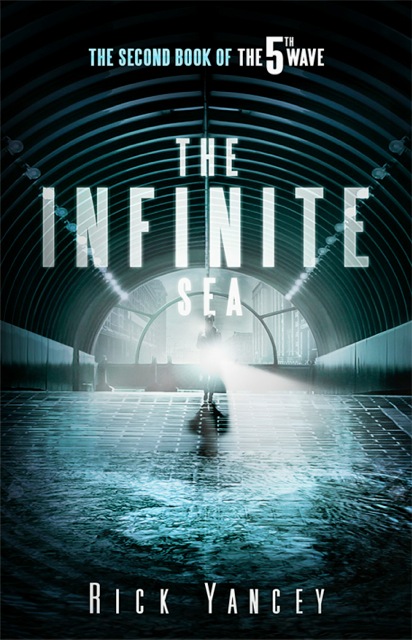
The Infinite Sea by Rick Yancey

(In which it shouldn’t really be a surprise.)

***

I have always had a love-hate relationship with series. Yes, it gives my reading life purpose and direction. But, it’s also been a usual source of disappointment. Also, I’ve always thought that the first book is better -- or at least most of the time -- just as the original novel is better than the film adaptation.

The sequel to The 5th Wave is no exception.

Picking up from the time Cassie and Ben escaped Wright-Patterson military base (with massive help from Evan), the novel allows the readers glimpse to the life of the teens from Squad 53 prior to the Arrival, and the stories were of the same soul -- death and despair -- only with different faces. Each one of them struggles to maintain sanity in an obviously hopeless world. They are being hunted by two alien squads as per Vosch’s orders, and they can’t leave their hideout because Cassie’s hopes of Evan returning are still up. Of course, Cassie’s lovesickness and apparent blindness to a very major issue created a rift between her and Ringer. 

Just when I thought the story would just exploit Cassie and Evan’s teenage hormones, Yancey showed he has a different idea, though I am not very certain if I liked it.

I’m not good with math. But I guess almost half of the novel was focused on a character I knew was supposed to be big, but didn’t believe deserved that much exposure. It was almost like how some readers of Game of Thrones (that I know) slightly complained that Daenerys Targaryen’ exhausting storyline could have been used for other characters. Only I don’t have issues with Daenerys.

Anyway, this character’s capture led to the epiphany I already thought was lurking in the corner as it’s actually a staple in most dystopic/apocalyptic YA novels that I’ve read (some of which I regretted). But honestly, I didn’t want it to happen. Maybe I was thinking of a different epiphany. But then again, it still makes sense. It started as a huge possibility that translated to a horrible truth, which is actually not very surprising.

The Infinite Sea oddly reminds me of The Maze Runner Trilogy by James Dashner and The Pure Trilogy by Julianna Baggott. If I am to expect an ending, though, I’d choose Dashner’s. But expectations are very expensive now. Afterall, Rick Yancey might have something else in mind. 

Currently reading:


Photo sources:

Tuesday, February 2, 2016

The 5th Wave by Rick Yancey

(In which humanity ain't got no Jedi knights.)


***
I did it again.

Saw a cool trailer.


And another cool trailer.


Watched the movie. And then read the original novel.

In the beginning, I didn't really watch the movie because of the plot since I am not that fond of alien-related movies. In fact, I have just watched Star Wars episode 1 to 6 in December -- just in time before the seventh episode came out, because, FOMO maybe? But what really got me to watch The 5th Wave is -- wait for it -- Nick Robinson. 


Maybe another reason why I read the novel was FOMO, or Nick Robinson -- or maybe both.

The premise of the novel wasn't really something extraordinary. In fact, it's somehow been a formula: aliens attack Earth, Earthlings defend it (or try to), a war ensues, and more often than not, the Earthlings win. Put in some romance and a lot of gory death, and you've got just another alien movie.

Unless this one's not just another alien movie.

In most fiction that involves an apocalypse by way of alien invasion, the evil guys often resort to quick annihilation. Imagine Darth Vader in the Death Star (and don't forget the Imperial March!). But the way the alien invaders in the 5th Wave chose to "rid Earth of humans" is much crueler. they chose to do it in steps or waves.

During the First Wave, they shut off the grid. In the Second Wave, they created natural disasters. Then, they made the avian flu virus evolve in the Third Wave. By the Fourth Wave, the "lucky" survivors will be hunted down by mercenaries. Those who still survive will be taken care of by the Fifth Wave.

After these waves, 7 billion people on Earth have been wiped out. And the "lucky" ones left were just corpses waiting to happen.

These lucky people were composed mostly of teenagers and children, each with their own horrible stories of loss to tell. Sixteen-year-old Cassie witnessed the death of her parents, and watched helplessly as her brother was taken by the military to safety. Desperate to keep a promise to her brother, she struggled to stay alive. But not without the help of the mysterious Evan Walker. Her thoughts were often filled by memories before the arrival of the aliens -- or Others. At times, she thought of Ben Parish, the hot guy who never know she exists.  When all of their paths cross, they finally have an idea of what humanity is really up against.

Reading the first chapter of The 5th Wave was like feeling your heartbeat -- simple sentence after simple sentence. Not that it's a bad thing. In fact, it makes one understand the cruciality of the situation. I mean, who has time to process compound-complex sentences when you're barely surviving? 

There were moments, of course, when I do a double-take on Cassie's (and mostly every teenage character's) personality as I try to grapple with the idea that sixteen-year-olds like her can be that tough. Or maybe I was just measuring the scenarios using my sixteen-year-old self, which, honestly, isn't a very good yardstick. But still, I often have difficulty grasping the fact that humanity's future lies on the hands of juveniles battling extraterrestrial (or paranormal, in other cases) villains. But I know this is YA, so I'll chill.

The love story part wasn't boring, actually. Nor is it something that makes me want to curl into a ball and purr like a cat. The conversations helped a lot in building Cassie and Evan's characters, though. But, at some point I was afraid that Evan Walker is channeling his inner Edward Cullen, but then again, don't most heroes do? Cassie's no Bella, though. And that's a very good thing. The girl's kickass!

The reality factor of the story comes in whenever a character is faced with human internal crises that will make Erik Erikson proud: identity confusion, trust vs. mistrust, intimacy vs. isolation -- you get the idea. These parts are my favorites, and usually the ones that kept me awake in the middle of the night.

The novel made me, once again, think of what matters in life and how much I'm willing to sacrifice in order to live and save someone's life. It made me learn the value of making choices and keeping promises. Also, it gives lessons on how to keep one's self alive in case of an apocalypse. That may come in handy. That is, if ever I get past Wave 3.


Currently reading:

The Infinite Sea by Rick Yancey


Photo Sources:

Friday, September 4, 2015

Pure by Julianna Baggott

(In which being a night owl isn't a very good idea sometimes.)

***

Dystopian YA fiction is so hot right now that its varieties can rival a detailed color chart. I do not know where that analogy came from. Or maybe I should blame the adult coloring book craze. But that's for another blog post.

When I read the synopsis for Julianna Baggott's Pure (the first book of the trilogy), I was filled with intrigue. There was a detonation that almost wiped humanity away. The survivors now lived a wretched life in a dead earth covered with gray ash. These survivors, however, can barely be called humans. Because of the detonation, their body got fused with the objects, people or animals near them, making them a horrifying living mosaic. Not everyone is wretched, though. A select few was saved and they lived inside a protected fortress known as the Dome. This is the world that Pressia Belze grew up in. 

Pressia dreads the day she turns sixteen because people at this age are gotten by OSR, a military organization. No one knows why. She also dreads leaving her sick grandfather behind. But when they came for her, she ran and met Bradwell, a rebel leader. Pressia and Bradwell are fused, just like everyone else. Pressia has a scar on her face and doll's head instead of a hand. Bradwell, on the other hand, has three living birds on his back. (Reading this late at night surely isn't that charming.)

With Bradwell's help, Pressia learns about the world before the detonations. Bradwell also expresses his hatred toward the people from the Dome and his plan to take them down.

Inside the Dome, a confused teenager named Partridge (son of Ellery Willux, the Dome's leader), wanted to know the truth behind his mother's death and miraculously escapes the tight-security facility.

He meets Pressia and the wretched and the deadly consequences of his escape unfurls.

Pure is such a heavy first book. Readers have to just accept the fact that a) the world is dead and basically everyone in it, b) but there are people who are still clean and fuse-free because, why not? and c) people in the outside world was somehow still able to survive. 

Add to the mix the confusing nanotechnology, a bunch of more horrendously fused people, a pair of complicated love story and you're in for a maze trip.

But accepting these simply doesn't erase the gnawing feeling of unease that there surely is more than the façade. And then you worry if a trilogy can answer all of your questions. But maybe it's just me and my impatience.

Questioning the existence and purpose of the characters is, of course, a major mover of this novel. It was just surprising, however, that the narrative flow of Pure confuses me when it has the same one as Game of Thrones.

Photo source

Friday, August 28, 2015

The School for Good and Evil: The Last Ever After

(In which the road to Ever After is always a difficult battle.)

***

Reading this book late at night gave me pimples. And all I can give it back is a blog post.

I can no longer clearly recall the details from the first two books of this series. If you need some refresher, click here for The School for Good and Evil book review.

Or maybe just watch this.


For The School for Good and Evil: A World Without Princes book review, click here.

And watch this, too.


If there is something about the first two books that strongly left me (and I say this with no remorse whatsoever) it's that I hate Sophie with a passion. And for good reason. She was a user and an abusive "bestfriend" to Agatha. Why and how Agatha fails to realize that Sophie is worse than a frenemy is beyond me (even after finishing the series). Or maybe I'm the close-minded one.

So it is no surprise how the first several chapters of this book began: Sophie is back on finding an ending befitting a princess for herself. And (insert adjective here) Agatha is always right there to clean up the mess.

When the School Master (whom everyone thought was Good, only to be revealed as Evil) took Sophie to his fortress after he almost killed Tedros, Sophie was left with a decision to either take the ring he offers her as a sign of their true, undying love, or let the sun die and the world along with it.

So she took the ring.

Only the ring makes the School Master (whose real name is Rafal) immortal as long as Sophie is wearing it. Sophie (is once again) deceived in her relentless pursuit of being a queen of a handsome boy from whatever kingdom.

And Agatha and Tedros' mission is, of course, to convince Sophie to destroy the ring herself (since no one else can) using the Excalibur and save the world.

And that was easier said than done. Unfortunately, time is running out. Evil also wanted their own happy ending. Villains are killing their Good nemeses.

The last book of Soman Chainani's series seems like something straight out of a Tolkien novel with some Filipino soap opera plot staples. But the backstories of famous fairy tales can definitely give Hollywood fairy tale reboots a run for their money – which is good since it's going to be turned into a movie soon.

Despite its childish façade, The Last Ever After insisted on the point that experience kept on emphasizing: that the obsessive pursuit of happiness is a trap sure to end in tragedy. True. Some parts of the story kept on transporting readers from suspending-disbelief to utter-disbelief zones ... and back. But it's a huge solace to know that love wins every time.

And just like the first two posts for this series, here's the wickedly transfixing book trailer.


Monday, November 3, 2014

Thirteen Reasons Why by Jay Asher


(In which it is frustrating.)

***

One way to know if a book is good is when one sees several blurbs in the first pages. If there were so many of them, then the reader is in luck. This blurb test is, of course, not a standard, but it's a start. And when I read the blurbs for Jay Asher's "Thirteen Reasons Why", I knew I was in luck.

Thirteen Reasons Why narrates the heartbreaking journey of Clay Jenkins around town as he listens to a set of thirteen cassette tapes (cassette tapes!) he received in the mail a few days back. After listening for the first several seconds, he knew right away that it was from Hannah Baker, his classmate who committed suicide. What’s chilling is the fact that twelve other people have received or have to receive the tapes and that they all are the reasons for Hannah’s death. Along with the tapes is a map where important places for Hannah are marked. These marked places are unforgettable to her, like the people who contribute to Hannah’s decision to take her own life.

I read the book thinking it was another take on the horror film “The Ring” and that there might be a curse on the cassette tapes since the tapes needed to be passed along to the next person on the list, otherwise, something terrible will happen. But, no. There was no avenging ghost. No curses. Or maybe a little. The curse is set on the conscience of those who listened. 

It was a quick read. And it was a haunting read. It’s the kind of haunting that does not scare you. At least Hannah didn’t sound eerie in the tapes. But it haunts you in the sense that it will let you – force you – to look back at all the years you’ve lived. It will force you to remember details about your interactions with others: your family, your teachers, your classmates, your friends, your enemies, even strangers. It will force you to recall kind deeds, kind words, rude deeds and rude words. It will force you to think back what evil you may have caused to the life of someone as you try to peacefully navigate your daily life. You will remember deaths. And you will remember the last time you talk to people before they died and wonder how you affected their lives.

It made me uneasy. But it didn’t stop me from reading. It made me sad. But, surprisingly, it didn’t make me cry.

I finished the book in 5 hours. And then I wondered at the solace it gave me. I should have wept and felt bad that a promising life was lost due to the frailty of today's youth's self-esteem and their constant need for social acceptance. I should have mourned for a seemingly innocent and pure love that never took place. If not for the dead girl, I should have been full of regret for the poor boy she left behind.

I felt sad for Hannah. But her decision is, apart from the terrible making of the terribly ill-advised children in her school, is a product of a series of terrible decisions. She needed help. But just like so unfortunate people. She tried to get help from the wrong people when all the while the only person who could save her has always been there and she sent him away. She is a victim, yes. But that doesn’t justify anything.

Instead of mourning for her death, I chose to celebrate life for those who took the tougher road and managed to stay alive despite the struggle to fit in this cruel world. I believe Hannah’s story is about these truly strong people as it is about her.


Currently reading:


Photo Sources:


Saturday, October 25, 2014

The School for Good and Evil: A World Without Princes by Soman Chainani


(In which fairy tale princesses are introduced to an extreme feminism awakening.)

***

I'll try my best not to include spoilers but I might fail. If you haven't read the first book yet, remember you've been warned.


When Sophie and Agatha escaped their fairy tale and returned to Gavaldon, they became instant celebrities. Autographs here, photo shoots there, seemingly endless interviews and book signings. Sophie just loves it and is convinced she could live a peaceful life in that unbearably boring town as long as she has Agatha. She was even willing to accept that her father is going to remarry a woman that is a total opposite of her goddess-like mother. As long as Agatha's there. 

But on the day of the wedding, Agatha wished for something that Sophie couldn't provide. And then the ghost of their fairy tale life came haunting them, along with knives and arrows and invisible assassins that are after Sophie for a huge bounty for her head. The two girls are left with no choice but to return to the dreaded school and try to set things right again.

Only the school isn't how they left it before.

Princes were banished. Fairy tales no longer end with a happily-ever-after-inspired themes and worse, female protagonists got rid of their princes and kings in most horrible ways possible, reign on their own and became celebrated heroes of women empowerment.

The schools were no longer divided into good and evil but into genders. Lessons were no longer taught on how to be better and worse versions of their characters but how to live without the other gender and, how to dispose them.

Sophie and Agatha saw their old schoolmates in one school and was flabbergasted to see a utmost lack of fashion and grooming sense practiced. No one is required to wear makeup, dresses, long hair and be uptight.

Agatha  couldn't imagine a functional world where the genders are at war with each other, especially when the other school is led by Tedros, who is after Sophie for ruining his fairytale ending with Agatha. Oh, the ego. 

But Sophie loved the lack of moral distinction. She wanted to stay. But Agatha, as always, wanted to do what's right for everyone. 

When they realized that they were brought back to school because of Agatha's wish, they discovered that in order to bring peace to the fairytale world, they need to find the Storian and end their story either with the "proper" one or with the two of them peacefully back in Gavaldon.

But things are more complicated than that, of course. Especially with the presence of new Dean.

In the second book of The School for Good and Evil, Soman Chainani again uses his interesting characters (although they are eyeroll-inducing at most times) as well as his simple narration embellished with twists that you'll find hard to guess until the last moment. This book was a quick read, making one wish that the last installment was already available. 

Waiting is such a bitter pill to swallow.

I wonder, though,  if the gender-bending act found in book one and two (which, I just have to say, was leveled up in book two) will still be found in book three. 

Well, since it was a staple in fairy tales and in this book, I wouldn't be surprised if it was.

Also, may I share with you it's very cinematic book trailer? You're welcome!


Currently reading:
Endymion Spring by Matthew Skelton


Photo sources:

Sunday, October 5, 2014

The School for Good and Evil by Soman Chainani


(In which bedtime stories are to blame.)


***

They say that parents reading to their children before bed positively reinforces children's interests in books. Well, I have never been read to by my parents (and I love books all the same). At one point I envied children who listen to their parents' narration of fairy tales with wide and excited eyes. And then they go to sleep either dreaming of a prince or a witch. 

And some even spend their lives either finding Prince Charming or being one.

Alright. I may have been overreacting. But surely this is not the first time anyone thinks fairy tales are stupid at best and sexist at worst. But unsurprisingly, everyone wants to live a fairy tale and live happily ever after. Besides, who doesn't?

Now that begs the question, what if there was a school to prepare one to live their fairy tale?

These are the secondary thoughts that ran in my head when I read the synopsis of Soman Chainani's YA novel.

Because really, the first thing I had in mind was how gorgeous the cover was! I thought it was a manga!

The cover features Sophie and Agatha (I don't know why but I sincerely believe Chainani should have thought of better names). Sophie, the beautiful, blonde-haired, emerald-eyed lass who tries to do good deeds just so she could get to study in the School for Good befriends the dark-haired and dark-clad cemetery-dwelling Agatha. They are obviously  the epitome of character foils, who end up being best friends against all odds and common sense.

They live in Gavaldon, a village taken straight out of a story book, with cottages, a town square, people living simply but happily and an endless forest surrounding them.

But Gavaldon is haunted by a mysterious phenomenon. Every year, two children vanish and are believed to have been sent to the School for Good and Evil. Over the years, the adults have unraveled some aspects of it. First, that the 'kidnapped' children were at least twelve years old. And second, one of them has to be Good and the other Evil.

This year, the pair is Sophie and Agatha. But just when it seemed to be very obvious who goes to which school, Agatha was dropped to the School for Good with princes and princesses and Sophie to the School for Evil with the witches.

Extremely convinced that there has to be a massive mistake, the girls tried switching schools so that Agatha could bring her Gothic fashion sense to the right place and Sophie could wear pink again. When they found out it was impossible, try their best to go back home.    But then they realized they couldn't go home without reaching the end of their fairy tale. So they decided that Sophie (the supposedly real princess) should just kiss her prince Tedros of Camelot (with whom she felt intensely infatuated at first sight) to get the stupidly cliche story over and done with. But their fairy tale seemed to have a mind of its own.

Totally gripping and unputdownable, The School for Good and Evil makes us even more grateful for fairy tale adaptations like Maleficent and Frozen. To begin with, these films teach us that happily ever after doesn't really have to depend on a man. Feminist, I know. But makes perfect sense. This is, I believe, an opinion shared by the novel.

It is a novel full of "illusion versus reality" and an overwhelming echo of Madam Lantin from Guy de Maupassant's "The False Gems" ("We cannot hide our true nature"). Hmmmm. So literary criticism.

But at some point, reading it feels like eating junk food - it's delicious and somehow liberating, but still empty calorie-laden and not guilt-free. There were many parts where I just roll my eyes and think "Oh, what a kid!" I just can't believe how Sophie could be so selfish and Agatha so selfless (well, they wouldn't be foils for nothing) and Tedros so weak. 

Oh, and the ending just simply took my breath away, not for the good reasons. It was so unprecedented and downright weird it would surely make Maleficent blush. I just can't get over it!

If you need more convincing, check this book trailer out!


Currently reading:


Photo sources:


Friday, September 19, 2014

The Maze Runner Trilogy by James Dashner


(In which my suspicions are confirmed.)

***

This is another case of me choosing a book because it has a movie adaptation. I think this particular marketing strategy is working on me. I have just also added If I Stay by Gayle Forman in my TBR List, by the way.

The moment I saw the trailer I thought it's just a mixture of mystery and action. Quite frankly, all I got from the trailer was that they have to escape a maze. After reading the trilogy for three days, I realized that the novel was actually Divergent, 28 Days Later and Cube tossed in a salad bowl.

Let me (sort of) break it down.

The Maze Runner opens with Thomas waking up in a pitch dark box. It opens and he is greeted by a sea of strange boys speaking an equally strange slang. He knows nothing about his past, except his name. Confused, clueless and alone, he lives every hour in utter impatience and seeks answers for his seemingly endless questions as his new life unfolds by the minute. He finds out that he is in The Glade, a place inhabited by teenage boys. Despite still being clueless about the whole ordeal – why he was there and why he doesn’t remember anything, as well as who did that to all of them – he tries to follow their strict and weird rules. As he gain friends, he learns that every member of The Glade has a specific job to do to keep the place suitable for habitation and that they value order quite highly. He is introduced to their own form of justice, leadership and social hierarchy, all the while wondering at how boys actually started living in The Glade. Merely days after his arrival, he discovers that a certain group of boys, called the Runners, are tasked to solve the Maze and lead everyone to their freedom. Thomas suddenly, desperately wants to be a Runner. Just when things are starting to fall in place for Thomas, a new Glader is sent by the Box and everything changed.

The effect of these changes is tremendously felt in The Scorch Trials, where it was revealed to Thomas and his friends that they are infected by the virus called the Flare. The virus eats up the brain until the person becomes insane and devoid of humanity. WICKED, the company behind the Glade, promised them to be given the cure if they made it at the safe haven after two weeks. They meet allies along the way, lose Gladers at every turn, see the horrendous effects of the Flare virus to the infected and get ambushed by the warning that a close friend will betray them all. Thomas proves to be a badass hero all throughout. Until the betrayer is revealed and his life is put in grave danger.

In The Death Cure, the Gladers prove one more that everything is just a test for them. (Un)fortunately, not all of them will succumb to the Flare, as some are immune. Thomas and all the survivors of the Scorch are offered to be given back their memories so they would understand WICKED’s mission and vision. Eventually, Thomas and his friends escaped with the help of some newfound allies from the Scorch. Then they meet the Right Arm, an organization that rebels against WICKED. Caught between saving his friends and saving the world, Thomas does one sacrifice after another and in the end finds out the real cure.

For some reason I have refused to read anything that resembles the plotlime of a zombie apocalypse. But I read The Maze Runner totally oblivious to what it could offer besides the utterly obvious. The result - just like the realization about the plot - was mixed. It was a page-turner, but not entirely unforgettable. It is one of those unputdownable books, but it is not unpredictable either. The narration is patient, the characters well-painted. I am no longer surprised about the nature of characters in YA books. I have slowly learned to suspend disbelief and convinced myself that 15-year-olds in every dystopic novel can do wonders and eventually save the world. All in the glory of their selflessness. They always make me want to restore my faith in the capacity of all human beings to sacrifice (almost) everything not for a selfish pursuit but for the benefit of everyone. And then I had to remind muself that this is just a story and that Dashner might not had even thought about readers like me while he was writing this.

But the novel was not without surprises either. To begin with, at first I thought the minimalistic cast would make it boring. Instead, it justified the struggles Thomas endured especially in the parts where he desperately seek his identity. The first book is an unfolding wonder both for the reader and for the character, making them both - almost literally - at the same page. Gone are dramatic ironies. The reader knows only as much as the characters know. And though it seemed to exaggerate the use of foreshadowing (because you can just consider anything in the books a foreshadowing), it worked. By always reminding the readers that the Creators were always up to no good, makes 'WICKED is good' such an oxymoron of epic proportion. It's Dashner's cultivation of mistrust that kept me glued to the books. Partly to get it over with but mostly to prove myself right or wrong depending on my bet.

Another refreshing thing for me is seeing non-White characters hold so much significance in the story and somehow avoid themselves from being killed three quarters into the whole trilogy. This may sound racially controversial but this is really a new experience for me. 

And finally, I believe the books have the most number of chapters I've ever read, considering each novel only has up to almost 350 pages. And each chapter is also the shortest I've seen. Which somehow reminds me of the length of Filipino soap opera segments between commercial breaks. 

Currently reading:


Photo Sources: