Saturday, March 31, 2012

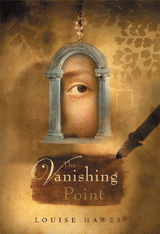
The Vanishing Point by Louise Hawes

(In which it was almost perfect.)
***
I don’t really love bread. But when it comes to pan de coco, it’s another story – especially if the bread is still warm and the coco filling is sweet and thick and juicy I could die. Not all my pan de coco experiences are the same, though. There were times when I regretted buying that piece of hard, chewy bread with barely a filling in the core.
Eating pan de coco (or anything you like, actually) is just like reading. We can attribute the reading experience to the best, the so-so and the worst meal we’ve had. With The Vanishing Point, by the way, I had to take the middle road.

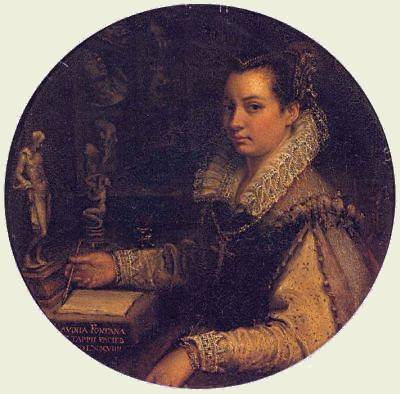
This novel by Louise Hawes unfurls with a tarot reading foretelling death and darkness in the Fontana family, then blossoms into the coming-of-age adventures of the young Lavinia Fontana, daughter of the mannerist painter Prospero Fontana. She grows up in a family where everything is scrutinized by the meticulous and stern Prospero. She spends most of her time learning Latin and sewing. And she does them all well. What she really wants, however, is to paint. But in a society where artisans are males and females are for domestic and oftentimes ornamental duties, a female painter in her father’s bottega could be a scandal. So she seeks help from the innocent Gian Paolo Zappi, a wealthy student of her father, to steal pens, papers and ink for her to practice drawing. It is when the treachery surfaces that blessings and trials emerge, one after another.


Now what makes reading The Vanishing Point like a pan de coco- eating moment is this: Imagine a soft plump, shiny bread still warm from the oven. The aroma fills your nostrils and makes your mouth water. You took a bite, and were convinced that this is one of the best coconut-filled bread you’ve tasted. You bit some more, savoring the filling that was the essence of it and then realized that the bread has more bread than filling. Yes, it’s getting to the best part and then finding out that the best part has actually gone in one fleeting moment. You read and read and, filled with the hopes and the thrill that there are more stories to be told and revelations to be made, you’ve reached the last page.
But perhaps what this book really wants to offer is that self-same chasing-for-the-best-part-feeling. That the best part is really where it ends – bravery and understanding amidst frustration and lunacy.
***
It’s a little bit embarrassing to have purchased this book just now. But after a long reading hiatus, any spine-and-page construction other than the academic ones could be highly cathartic. Especially this.

Tuesday, March 20, 2012

The Blogger in the Jungle Called the “Teaching Profession”


(In which I try to fit in and . . .)

***

10 lesson plans, one journal critique, PowerPoint presentations, grades to compute, papers to check, and more importantly, more than fifty books waiting on the pile and on the shelves. I kept on saying I was busy. And I thought I really was. Until I became a teacher.

Yes, finally. So if ever someone from the 58 people who have followed me for the last 5 months or so notices the lack of post since . . . ehem . . .October 21st, the unsolicited excuse is hereby offered. I was busy. So terribly busy I’m going to die. Well, almost.


***

If there’s one thing I feel good about teaching, it’s teaching. Speaking in front of people and seeing the bewildered expression on their faces whenever they learned something new, or the enjoyment they couldn’t hide when the lesson turned out to be fun is utterly priceless.

And if there’s something about teaching that drives me crazy, it’s the paperwork. And the deadline, of course. Oh I forgot dealing with difficult people consisting of, but not limited to failing students and their guardians. Whenever I encounter things like these, I remember what my IELTS student once told me:

“I think you don’t like people. You like reading and writing and being alone. But yes, you like talking. So I think you will fit better in publication, or media. But not much in teaching.”

So now I’m looking at this rushed piece of work driven by the urgent need to reclaim a fragment of my previous blogging self and I wondered whether what the student said was true – that I’m a better writer than a teacher. But if I am a better teacher than a writer, as what I want to believe, then why do I feel so . . .?Perhaps that’s for another post.

Photo Source:


Friday, October 21, 2011

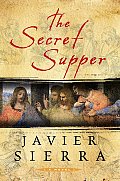
The Secret Supper by Javier Sierra

(In which I embark on a journey to solve a timeless mystery.)

***

One of my former colleagues from the academy once told me her experience when she took an international standardized examination. In her speaking test, she was asked by the examiner if she agrees that a picture paints a thousand words. She answered, “No, because if a picture paints a thousand words, then we need to speak a thousand words to prove that.” And the examiner beamed at her.

The question and her answer must have been something that Leonardo da Vinci wanted to reconcile when he painted The Last Supper. He created a painting that is innocent on the surface but controversial deep within, so that those who see it would contemplate on all its possible cryptic messages and then talk about it for centuries.

Among the many baffling irregularities depicted in Leonardo’s masterpiece includes the missing halos, the, missing meat on the table, Simon Peter holding a dagger and a rather feminine Apostle John, some of which were attributed with Da Vinci’s veganism, an ancient confusion of theological teachings, Mary Magdalene and ultimately, Leonardo’s heresy – the angles that Javier Sierra wishes to give light in his originally-Spanish novel, made readable to English readers through the translation by Albert Manguel.

This historical thriller is narrated by Agostino Leyre, the Chief Roman Inquisitor and Master General of the Secretariat of Keys as an account of his search of the true identity of The Soothsayer, the secret Hermes who warns Rome of the Milanese Duke Ludovico Il Moro’s heretic plan to revive the ancient Athenian philosophies right under the nose of the Papacy, and the huge part played by Leonardo da Vinci in this heterodoxy. Furthermore, The Soothsayer speaks of the disturbing symbols in Leonardo’s mural in Santa Maria delle Grazie. Assisted by the Domican monks of Santa Maria and fascinated by Leonardo’s genius, Fra Agostino becomes part-witness, part-investigator as a cycle of deaths flows and more revelations surface. The narrator moves from being the man convinced that he is the Sherlock Holmes of this mystery, then later on finds himself as a part of the mystery, then as a victim. Finally, he realizes that the true enigma is not that of The Soothsayer’s but Leonardo’s. And the solution to the latter leads to a more painstaking search.

I am still leery of religious-tainted fiction. But this reading experience opens up something anonymous in me. I could, for the time being, let my reading self not be hindered by matters of conflicting doctrines, or the darkness of every religion’s past, or by the fact that all religions’ claim for truth and supremacy doesn’t seem to end. We read to let our minds be opened, and/or our logic to be sharper, and/or our faith to be rejuvenated.

I feel so free I penned Dan Brown down on my TBR list. But for the meantime . . .


Currently reading

Saving Fish from Drowning by Amy Tan


Photo Source:

The Secret Supper
Saving Fish from Drowning