Tuesday, April 1, 2014

The Divergent Trilogy by Veronica Roth


(In which I have to accept that literary teenagers are generally not literal.)


***


If there is one thing that I’d like my Literature students to acquire, (not learn, because I’m afraid I can never teach it. Or if I can, that it will not take them as far as I like it.) it is to be motivated to read. Their reading interest has also interested me and in the process frustrated me. I wish I can just transfer my own penchant for reading just to get it all over and done with already. But of course this world is not fictional so I just can’t. Maybe one day I’ll write a novel about this and consider it my greatest contribution to the teaching profession. Kidding.

As an on-again-off-again reader, my reading motivation varies depending on season and stress level, from interest (hello, art and historical fiction) to just plain curiosity and the urge not to stop reading (I’m looking at you, the rest of my books). But recently, my motivation lies embarrassingly (or maybe not) on movie adaptations of novels, as what happened to The Hobbit, The Mortal Instruments Series, The Hunger Games Trilogy and The Fault In Our Stars. Enter: The Divergent Trilogy.

I’ll admit that if not for the film adaptation being “One of the Most Anticipated Movie of the Year”, I would not have taken interest in this novel, primarily because I don’t quite enjoy dystopian YA novels. I still believe that sixteen to eighteen-year-olds have better things to do than… well… leading a revolution. But reading them once in a while enlightens me in a way that other subgenres can’t. So, anyway. . .
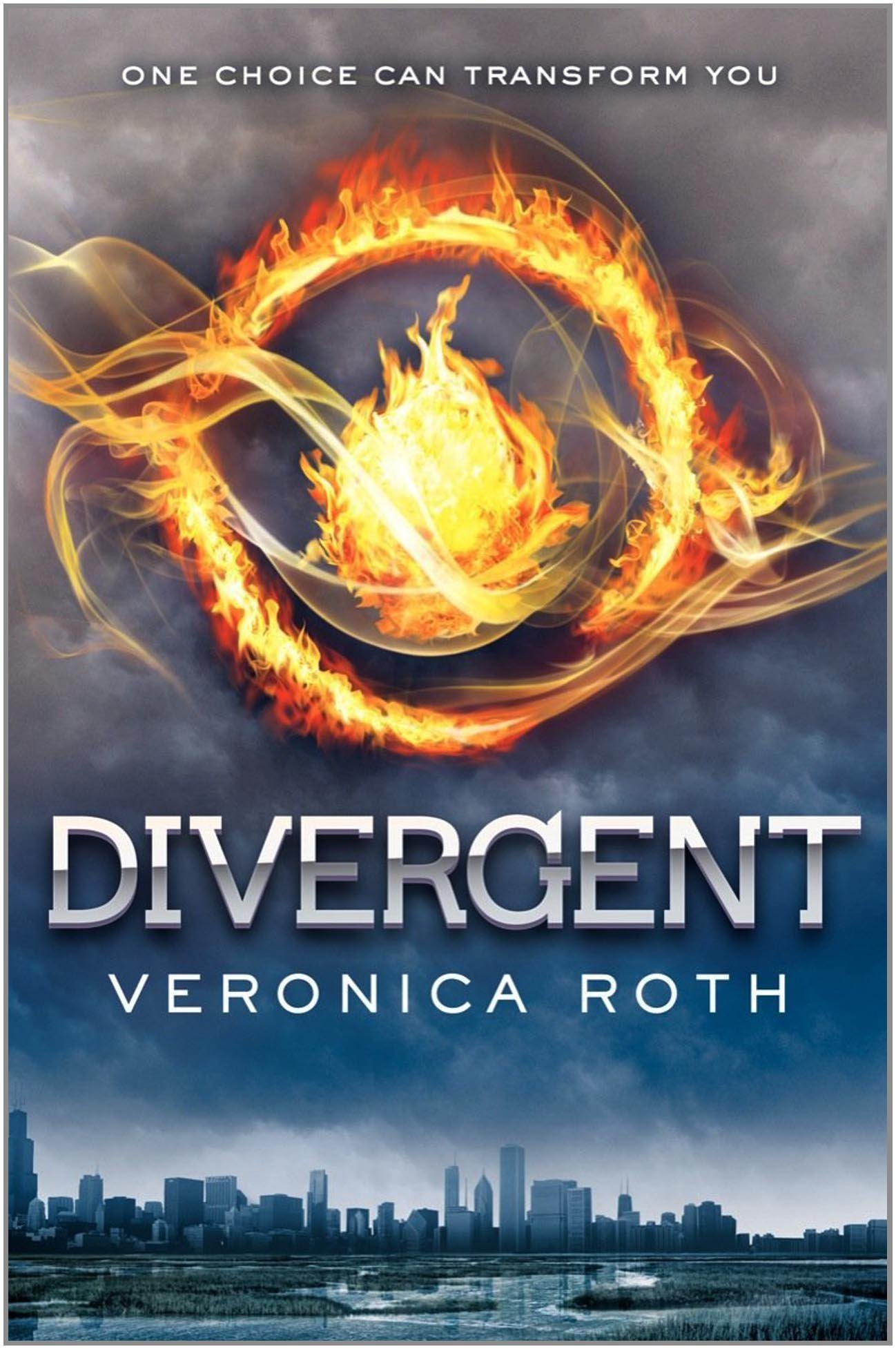
In Divergent, the first book, Beatrice Prior and her brother Caleb, get to choose their faction in the Choosing Ceremony. There are five factions to choose from, and the factions are identified by the dominant virtue of their members. There’s Abnegation, who value selflessness; Erudite, who value intelligence; Dauntless, who value courage; Candor, who value honesty; and Amity who value peace. Beatrice and Caleb are both born in Abnegation, but in the Choosing Ceremony, they will decide if they want to stay in their home faction or choose to leave it for another one; the latter being a bitter choice since that would mean abandoning their families too.

But they choose the latter. Beatrice chooses Dauntless and Caleb chooses Erudite. The next part after choosing is staying in their chosen faction. And the way to stay is to survive the initiation. Otherwise, they will be thrown out of the faction and will be outcast, known as factionless. 

Beatrice decides to be known as Tris and struggles to fit in Dauntless where she experiences humiliation after humiliation both because of her upbringing and her skills, or lack thereof. But these struggles are made surmountable thanks to Four, whom she meets and falls in love with. But their togetherness and her newfound life in Dauntless is threatened by her true identity, which will also be the cause of the loss of so many lives, including the ones she value the most.
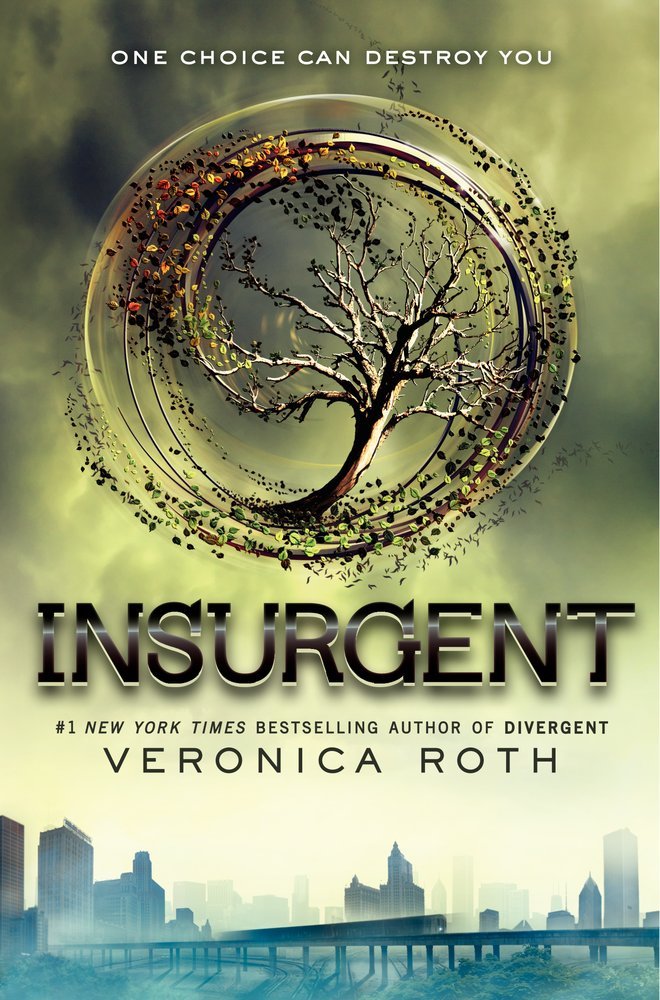
In Insurgent, in her desire to usurp the faction government (led by the Abnegation because it makes perfect sense to have your leaders selfless) Jeanine Matthews led the Erudite to launch an attack simulation serum to control the minds of Dauntless and make them zombie soldiers. Tris and Tobias (aka Four), being Divergent, are immune to the serum and are able to stop the simulation attack. In the midst of a civil war, they seek refuge in the headquarters of other factions that may or may not prove to be a wise decision. As their already small world becomes even smaller, they start to rely on their friends from Dauntless and other factions to survive. Jeanine continues to hunt for the Divergent and one by one, she claims the lives of people closer to Tris and Tobias in her pursuit. Broken by guilt and haunted by fears, Tris allows her Divergence to save the people she loves most, and in the process realizes how fine the line is between being selfless and being reckless and downright stupid. And in the moment of absolute terror in her pursuit of truth amidst all the lies, she discovers what other forms love could take, how bitter betrayal really is and how much she craves life.

Allegiant opens with a metarevolution. Jeanine Matthews is dead and the factionless leader Evelyn Johnson now reigns in a fashion not-so-different from Jeanine’s. In response to Evelyn’s tyranny, a revolutionary group called Allegiant is formed by the most unlikely people and as part of their defiance to the current government, Tris and her friends march out of their city (not quite literally) and find themselves in the United States after the Puritan War. Here they find the government rebuilding whatever is left, the people who are responsible for their existence and the truth about the nature and purpose of their Divergence. Just when they thought they’ve found a new home, another uprising endangers them and in the continuous unraveling of lies and secrets, they find themselves armed with faith and guns again; the former leading them to their victory and the latter bringing the conclusion that makes AND breaks them.

Reading the trilogy is not an easy task, especially the first book. What with the names of the factions not being parallel (which always troubles me). Also, it’s easy to get carried away with the insubstantial information and lose focus. And it’s even harder to convince yourself that sometimes, you just have to know as much as the characters do. In the second book, things get exciting, even if it means a lot of flirting with death (and actual deaths) and an overflowing character analysis. It’s also good to get nearer the truth, albeit getting closer to losing whatever battle you’re fighting. 

And speaking of battles, it will indeed come to a point when you will just ask yourself how many more uprisings there will be to see the end of all this. But then again, I believe the novel isn’t about ineffective governments or even being special, like being Divergent. Just like most literary work (I hope I won’t be ostracized for almost calling this literature.), the Divergent Trilogy tackled the complexity of human nature and our inability to be contented, as well as the horrifying effects of both.

It also taught me to become patient. More than half of the third book drags me. It was almost agonizing. But just like any other long trip, the ending is all worth it. It may not be the ending we all want, but there is undeniable beauty in it. Apart from patience, it also highlights awareness of literary devices, I could have saved myself from suffering had I not ignore the purpose of the change in narrative style. But it’s too late. Most importantly, I believe, the novel made me experience, in a rare but enlightening occasion, that other purpose of tears that entirely defies scientific explanation.

Photo Sources:

Tuesday, October 1, 2013

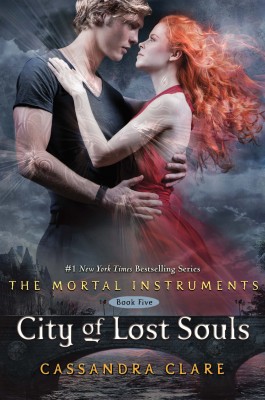
The Mortal Instruments: City of Fallen Angels by Cassandra Clare


(In which surprises fall semi-unlimitedly.)

***

I believe one of the codes fiction writers live by is to never run out of surprises for readers. If this is the only criterion upon which any fictional work should be judged, then City of Fallen Angels will be one of the high-scorers.

After the battle in Alicante where Downworlders and Nephilim join hands against Valentine and his son Jonathan (who took Sebastian Verlac's identity), life for Clary and her friends seems to go back to normal. I believe there is a tremendous need to capitalize "seems". To elucidate, Simon is dating Maia and Isabelle (which means they are both oblivious to it of course); Luke still has to be used to Jocelyn loving him and the fact that they are getting married; and Clary is now openly dating Jace after the truth of his parentage gets revealed, which makes her happy, only that Jace is acting terribly weird.

On top of the sudden change in Jace' treatment of Clary, the gang gets confronted by appearance of new faces - Kyle, the hot guy who wants to apply as a vocalist in Simon's band and Camille, a vampire who asks Simon for his help to get rid of Raphael. With the precious information from these seemingly-innocuous people, Clary and others are led to various hair-raising discoveries that ranges from an assassination plot on one of them to a sinister attempt to emulate Valentine's experiment. And just when Clary thought that love indeed conquers everything, she'll realize that it is a means of destruction after all.

City of Fallen Angels is a crafty concoction of teenage emo moments and their equally crafty attempt to act like adults. In this installment, the characters try to solve their own problems so as not to be burdens to others. This character transformation, apart from Clare's signature humor, is what I find enchanting about this book. Clary takes responsibility for her actions and feels the need to protect people and not the other way around. Simon finally discovers the true power of the Mark of Cain amd uses it to save a friend's life. Maia gradually decides to move forward without bitterness or remorse. Alec embraces his true nature even more and Isabelle learns to accept her vulnerabilities. Mostly positive transformation, eh?

Except, I think, for Jace.

He didnt't lose his signature cockiness and his over-awareness of his staggering good looks, thank goodness. In fact, we know things are fine when he starts praising himself and bullying others with his sarcasm. What he lost, however, is that thing that drives Clary, or other people, to him - his ethereal ability to provide comfort and protection. In City of Fallen Angels, he is the one who seems to be in constant need of being protected and nurtured. Or maybe I was wrong and his vulnerability is still what attracts Clary et al towards him. But, sexism aside, I don't quite enjoy the idea of Jace being an emo kid with tons of teenage drama. And whatever happened to his linguistic eloquence? And then the explanation that he could offer to Clary regarding his sudden coldness is "I don't understand what's happening to me" or "I love you, Clary"? Why did he wait for Clary to seek help from the Silent Brothers? Why can't he tell Simon if he can't tell Clary? And then, as if he's not yet in trouble, his problems turn out to be detrimental for everyone. I thought Jace could do better than that. But then again, that's just me. Those who find it endearing must have been tired of the whole damsel-in-distress thing and finally thought that it's about time men have their share of being rescued. Besides, Clary is the heroine of this series? Sigh.

Well, after everything's been said and done, what really matters is that this book is an enjoyable read. And if we rely on that blurb  by The Trades saying “. . . If you’re a fan of The Mortal Instruments, you need to read City of Fallen Angels. And if you aren’t a fan, then you really need to find out what’s wrong with you, fix it, and start from book one.”  to gauge a part of our sanity, then at least I'm pretty sure nothing's wrong with me yet.


Currently reading:
City of Lost Souls by Cassandra Clare


Photo Sources:

Saturday, September 14, 2013

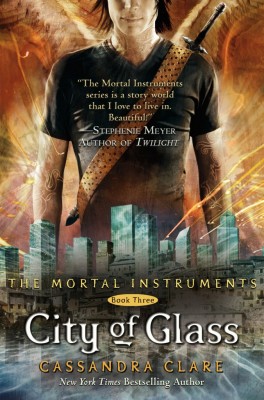
The Mortal Instruments: City of Glass by Cassandra Clare

(In which we finally get answers.)

***

The bad thing about reading a series late (i.e., when the series already has five books and is already turned into a movie) is that you get the terrible feeling that everybody already knows it except you, which kind of justify the necessity of adding fomo (fear of missing out) to the Oxford Dictionary. The good thing (and believe me when I say it outweighs the bad) is that you don’t get to suffer from the more terrible feeling of waiting for the next book to come. You finished one book and move on to the next without further ado. Now, that’s addicting. And a convenient addiction at that.

At this point, I have to tell you that spoilers, albeit minor, are included in this blog post. Continue reading at your own risk.

When Clary receives an invisible-to-mundanes visitor in the City of Ashes, she realizes that the coma her mother is suffering from is self-induced and could be reversed by a warlock named Ragnor Fell. And she decides to go to Idris, the home of the Shadowhunters, to find the warlock and wake her mother up. The City of Glass opens with Jace, along with the Lightwoods preparing to go home to attend the Clave meeting especially now that they know that Valentine plans a large-scale war against the Clave. Clary intends to go with the Lightwoods but due a sudden attack of Forsaken, she is left behind and is forced to open up a Portal to Idris. Upon arriving there, she is welcomed by the poisoning waters of Lake Lyn, followed by a meeting with Luke’s sister, then a meeting with Sebastian Verlac (who eventually helps her find Ragnor Fell) and finally walking in on Jace and his new girlfriend in the Penhallow’s house.

Despite the awkwardness of things, Clary is determined to seek all necessary help from anyone who is willing to give it in order to save her mother, even if it means asking Jace to take her to the Wayland manor to retrieve a book that will reverse the coma-inducing spell Jocelyn puts on herself. In there they find the book, along with some of Valentine’s nastiest secrets. And in their final attempt to right the wrongs done by long-running philosophical feuds among Shadowhunters and Downworlders, Jace and Clary discover the truth about their powers, their families and the fact that they are not siblings. 

Among the first three installments, it is not unfair to say that City of Glass is the most exciting aside from the fact that it is the most action-packed; what with the rain of demons from Valentine’s army and the children of the Night, Moon, Lilith and Faerie all coming together against one common enemy in an epic warfare. But what really makes it exciting is the transformation of the characters. Clary is more determined and more powerful while Jace is more expressively passionate and aggressive. And Simon, the geeky, playing safe Simon, finally learns the value of true sacrifice. 

City of Glass is a complex tapestry of the grand battle against extinction and corruption, woven with lies, deception, confession and acceptance all in one thread. It is an opus with themes as fragile as glass itself. In an equally-fragile city inhabited with equally-fragile characters, Jace and Clary and all the major teenage Shadowhunters are forced to maturity, with the realization that the path to the truth is led by love. In the final pages, however, they discover that love might also be the cause of their downfall.

Currently reading:


Photo Sources: