Friday, September 19, 2014

The Maze Runner Trilogy by James Dashner


(In which my suspicions are confirmed.)

***

This is another case of me choosing a book because it has a movie adaptation. I think this particular marketing strategy is working on me. I have just also added If I Stay by Gayle Forman in my TBR List, by the way.

The moment I saw the trailer I thought it's just a mixture of mystery and action. Quite frankly, all I got from the trailer was that they have to escape a maze. After reading the trilogy for three days, I realized that the novel was actually Divergent, 28 Days Later and Cube tossed in a salad bowl.

Let me (sort of) break it down.

The Maze Runner opens with Thomas waking up in a pitch dark box. It opens and he is greeted by a sea of strange boys speaking an equally strange slang. He knows nothing about his past, except his name. Confused, clueless and alone, he lives every hour in utter impatience and seeks answers for his seemingly endless questions as his new life unfolds by the minute. He finds out that he is in The Glade, a place inhabited by teenage boys. Despite still being clueless about the whole ordeal – why he was there and why he doesn’t remember anything, as well as who did that to all of them – he tries to follow their strict and weird rules. As he gain friends, he learns that every member of The Glade has a specific job to do to keep the place suitable for habitation and that they value order quite highly. He is introduced to their own form of justice, leadership and social hierarchy, all the while wondering at how boys actually started living in The Glade. Merely days after his arrival, he discovers that a certain group of boys, called the Runners, are tasked to solve the Maze and lead everyone to their freedom. Thomas suddenly, desperately wants to be a Runner. Just when things are starting to fall in place for Thomas, a new Glader is sent by the Box and everything changed.

The effect of these changes is tremendously felt in The Scorch Trials, where it was revealed to Thomas and his friends that they are infected by the virus called the Flare. The virus eats up the brain until the person becomes insane and devoid of humanity. WICKED, the company behind the Glade, promised them to be given the cure if they made it at the safe haven after two weeks. They meet allies along the way, lose Gladers at every turn, see the horrendous effects of the Flare virus to the infected and get ambushed by the warning that a close friend will betray them all. Thomas proves to be a badass hero all throughout. Until the betrayer is revealed and his life is put in grave danger.

In The Death Cure, the Gladers prove one more that everything is just a test for them. (Un)fortunately, not all of them will succumb to the Flare, as some are immune. Thomas and all the survivors of the Scorch are offered to be given back their memories so they would understand WICKED’s mission and vision. Eventually, Thomas and his friends escaped with the help of some newfound allies from the Scorch. Then they meet the Right Arm, an organization that rebels against WICKED. Caught between saving his friends and saving the world, Thomas does one sacrifice after another and in the end finds out the real cure.

For some reason I have refused to read anything that resembles the plotlime of a zombie apocalypse. But I read The Maze Runner totally oblivious to what it could offer besides the utterly obvious. The result - just like the realization about the plot - was mixed. It was a page-turner, but not entirely unforgettable. It is one of those unputdownable books, but it is not unpredictable either. The narration is patient, the characters well-painted. I am no longer surprised about the nature of characters in YA books. I have slowly learned to suspend disbelief and convinced myself that 15-year-olds in every dystopic novel can do wonders and eventually save the world. All in the glory of their selflessness. They always make me want to restore my faith in the capacity of all human beings to sacrifice (almost) everything not for a selfish pursuit but for the benefit of everyone. And then I had to remind muself that this is just a story and that Dashner might not had even thought about readers like me while he was writing this.

But the novel was not without surprises either. To begin with, at first I thought the minimalistic cast would make it boring. Instead, it justified the struggles Thomas endured especially in the parts where he desperately seek his identity. The first book is an unfolding wonder both for the reader and for the character, making them both - almost literally - at the same page. Gone are dramatic ironies. The reader knows only as much as the characters know. And though it seemed to exaggerate the use of foreshadowing (because you can just consider anything in the books a foreshadowing), it worked. By always reminding the readers that the Creators were always up to no good, makes 'WICKED is good' such an oxymoron of epic proportion. It's Dashner's cultivation of mistrust that kept me glued to the books. Partly to get it over with but mostly to prove myself right or wrong depending on my bet.

Another refreshing thing for me is seeing non-White characters hold so much significance in the story and somehow avoid themselves from being killed three quarters into the whole trilogy. This may sound racially controversial but this is really a new experience for me. 

And finally, I believe the books have the most number of chapters I've ever read, considering each novel only has up to almost 350 pages. And each chapter is also the shortest I've seen. Which somehow reminds me of the length of Filipino soap opera segments between commercial breaks. 

Currently reading:


Photo Sources:


Thursday, September 11, 2014

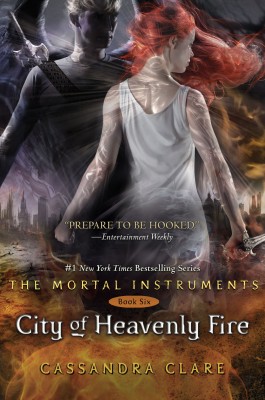
The Mortal Instruments: City of Heavenly Fire by Cassandra Claire


(In which human beings are proven once again to be suckers for happy endings.)


***

When I decided to read series, I thought it's a win-win situation. First, I get to read books that I don't usually read (because I haven't seen an art fiction series yet). Second, I save myself from deciding what book to read next. Finally, I get to read a lot of books. The only downside I realized at that time is the painful waiting for the next installment. I'm looking at you, George R. R. Martin!

In retrospect, I found out that I completely forgot that some series tend to get old real fast. Worse, some are even predictable and cliché, albeit in different levels. And now I'm giving Cassandra Clare's Heavenly Fire my bloated stare.

To begin with, I do not hate the book (Although I have to admit that I can't get the 'Morganstern' typo out of my head). It's just that I thought the story deserves more than the and-of-course-Sebastian-has-to-die and all the rest lived happily ever after. I'm sorry, that's an exaggeration. And stop scowling because that is not a spoiler. What, did you not see his death coming?

Cassandra Clare warned her fans that six main characters will die at the last book. (By page 338 the fourth character dies. And the last two died at the boss battle stage.) While everyone was crying out for her to save Magnus, I was wondering if Clare would dare pull a Veronica Roth and kill Clary. But she didn't do that. The following is my own summary of Heavenly Fire.

After the battle at the Burren, where Clary, Jace, Alec, Isabelle and Simon found out about the Shadowhunters evilly transformed by the Infernal Cup, the whole race of Nephilim face a far greater and more threatening Sebastian than the one who bound Jace. He now leads the army of Dark Shadowhunters (now called Endarkened) and their number continues to rise as they attack Institutes and either Turn or murder Shadowhunters. The only hope to save Nephilim lies in the heavenly fire contained by Jace's body, which he doesn't know how to control yet. With the help of their unlikely band of supernaturals (again), Jace and Clary uncover betrayals and alliances, journey to a desolated realm of Hell and attempt to save the world... but not without sacrifices.

These sacrifices come in the form of their friends' corpses and memories. But just as it is impossible to regain lives, one character’s memories, on the other hand, could be retrieved in just a matter of, what, weeks? Say what you will. But I can't simply believe this could be done by sheer willpower. And the memory was sucked out of this character by a Demon Prince! This is the part where I threw up my hands in frustration. I am not totally in favor of letting major characters die but I think Clare's refusal to let it happen led to pushing things to the height of annoyance. I mean, if she doesn’t want any serious harm to come to Clary and friends, at least when she decided to sacrifice a major character’s memories in lieu of life, she should have just left it at that. But then everyone’s life would be incomplete and that would be a terrible ending for everyone, correct? I am not sure. Or maybe I just have issues with predictable, happy endings.

That’s for another blog post.

Now, even after realizing that I only have ten more pages towards the end of the series, I don’t feel a sense of finality. I was thinking, “Am I supposed to be shocked by a cliffhanger here?” Suddenly, I was finished reading. But then the book wasn’t finished with me yet – with me and with all the other readers of this seemingly never-ending saga of Shadowhunters. I knew because I was greeted with an introduction to a new series which will pick up from the ending of Heavenly Fire. Surprise!

But I am finished with it. This will be my last Shadowhunter-related reading experience. They get old real fast, indeed. But to those whose tolerance is impressively high, you are welcome to another Nephilim adventure with this:


You will have to zoom the image many times to read the Seelie Queen’s message to the Arthur Blackthorn of the Los Angeles Institute because, you know, the Fair Folk are quite secretive with their correspondence.


Currently reading:


Photo sources:

Tuesday, April 1, 2014

The Divergent Trilogy by Veronica Roth


(In which I have to accept that literary teenagers are generally not literal.)


***


If there is one thing that I’d like my Literature students to acquire, (not learn, because I’m afraid I can never teach it. Or if I can, that it will not take them as far as I like it.) it is to be motivated to read. Their reading interest has also interested me and in the process frustrated me. I wish I can just transfer my own penchant for reading just to get it all over and done with already. But of course this world is not fictional so I just can’t. Maybe one day I’ll write a novel about this and consider it my greatest contribution to the teaching profession. Kidding.

As an on-again-off-again reader, my reading motivation varies depending on season and stress level, from interest (hello, art and historical fiction) to just plain curiosity and the urge not to stop reading (I’m looking at you, the rest of my books). But recently, my motivation lies embarrassingly (or maybe not) on movie adaptations of novels, as what happened to The Hobbit, The Mortal Instruments Series, The Hunger Games Trilogy and The Fault In Our Stars. Enter: The Divergent Trilogy.

I’ll admit that if not for the film adaptation being “One of the Most Anticipated Movie of the Year”, I would not have taken interest in this novel, primarily because I don’t quite enjoy dystopian YA novels. I still believe that sixteen to eighteen-year-olds have better things to do than… well… leading a revolution. But reading them once in a while enlightens me in a way that other subgenres can’t. So, anyway. . .
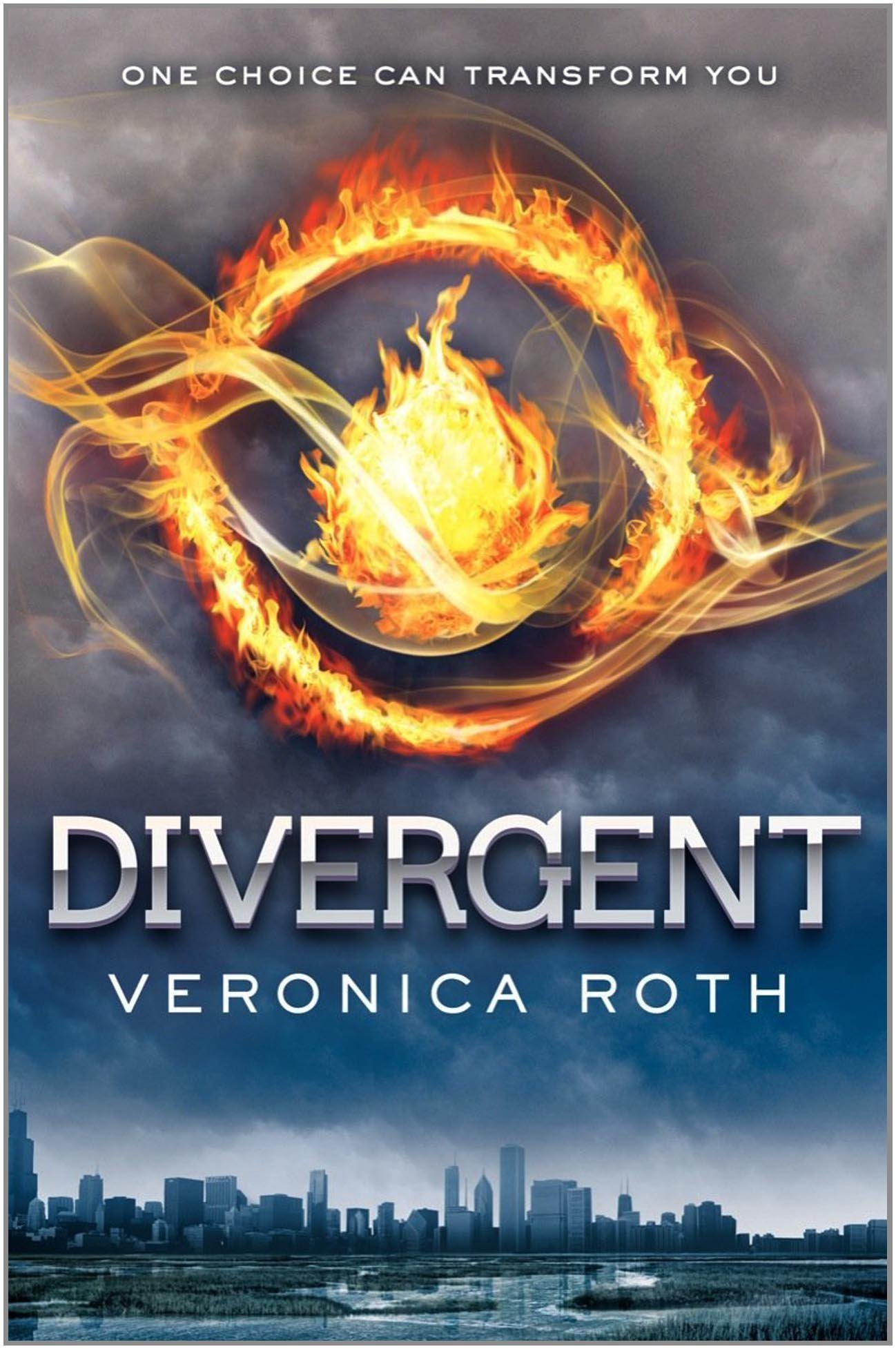
In Divergent, the first book, Beatrice Prior and her brother Caleb, get to choose their faction in the Choosing Ceremony. There are five factions to choose from, and the factions are identified by the dominant virtue of their members. There’s Abnegation, who value selflessness; Erudite, who value intelligence; Dauntless, who value courage; Candor, who value honesty; and Amity who value peace. Beatrice and Caleb are both born in Abnegation, but in the Choosing Ceremony, they will decide if they want to stay in their home faction or choose to leave it for another one; the latter being a bitter choice since that would mean abandoning their families too.

But they choose the latter. Beatrice chooses Dauntless and Caleb chooses Erudite. The next part after choosing is staying in their chosen faction. And the way to stay is to survive the initiation. Otherwise, they will be thrown out of the faction and will be outcast, known as factionless. 

Beatrice decides to be known as Tris and struggles to fit in Dauntless where she experiences humiliation after humiliation both because of her upbringing and her skills, or lack thereof. But these struggles are made surmountable thanks to Four, whom she meets and falls in love with. But their togetherness and her newfound life in Dauntless is threatened by her true identity, which will also be the cause of the loss of so many lives, including the ones she value the most.
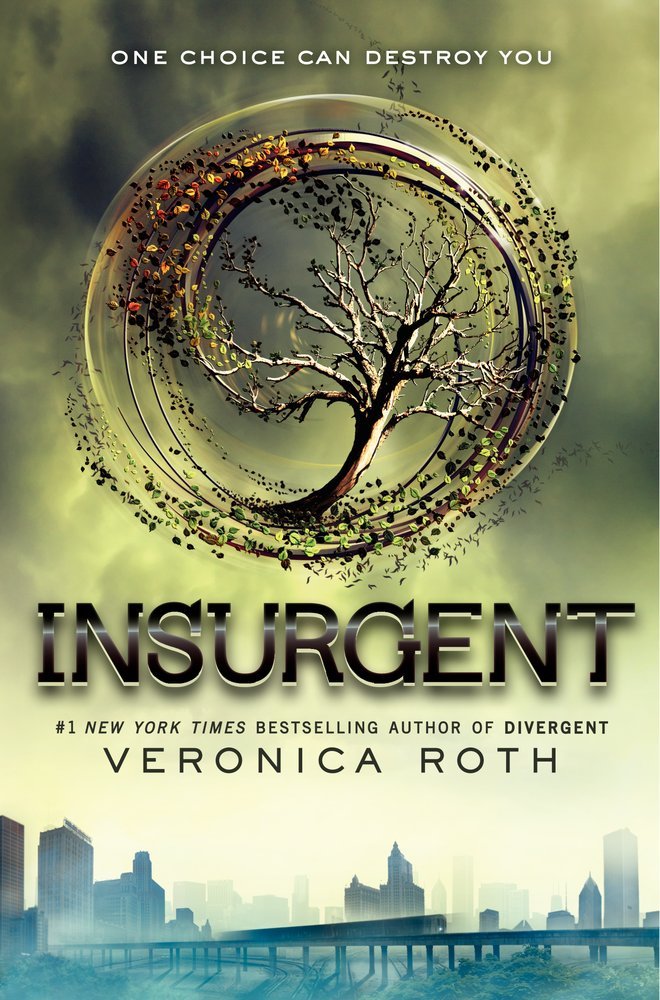
In Insurgent, in her desire to usurp the faction government (led by the Abnegation because it makes perfect sense to have your leaders selfless) Jeanine Matthews led the Erudite to launch an attack simulation serum to control the minds of Dauntless and make them zombie soldiers. Tris and Tobias (aka Four), being Divergent, are immune to the serum and are able to stop the simulation attack. In the midst of a civil war, they seek refuge in the headquarters of other factions that may or may not prove to be a wise decision. As their already small world becomes even smaller, they start to rely on their friends from Dauntless and other factions to survive. Jeanine continues to hunt for the Divergent and one by one, she claims the lives of people closer to Tris and Tobias in her pursuit. Broken by guilt and haunted by fears, Tris allows her Divergence to save the people she loves most, and in the process realizes how fine the line is between being selfless and being reckless and downright stupid. And in the moment of absolute terror in her pursuit of truth amidst all the lies, she discovers what other forms love could take, how bitter betrayal really is and how much she craves life.

Allegiant opens with a metarevolution. Jeanine Matthews is dead and the factionless leader Evelyn Johnson now reigns in a fashion not-so-different from Jeanine’s. In response to Evelyn’s tyranny, a revolutionary group called Allegiant is formed by the most unlikely people and as part of their defiance to the current government, Tris and her friends march out of their city (not quite literally) and find themselves in the United States after the Puritan War. Here they find the government rebuilding whatever is left, the people who are responsible for their existence and the truth about the nature and purpose of their Divergence. Just when they thought they’ve found a new home, another uprising endangers them and in the continuous unraveling of lies and secrets, they find themselves armed with faith and guns again; the former leading them to their victory and the latter bringing the conclusion that makes AND breaks them.

Reading the trilogy is not an easy task, especially the first book. What with the names of the factions not being parallel (which always troubles me). Also, it’s easy to get carried away with the insubstantial information and lose focus. And it’s even harder to convince yourself that sometimes, you just have to know as much as the characters do. In the second book, things get exciting, even if it means a lot of flirting with death (and actual deaths) and an overflowing character analysis. It’s also good to get nearer the truth, albeit getting closer to losing whatever battle you’re fighting. 

And speaking of battles, it will indeed come to a point when you will just ask yourself how many more uprisings there will be to see the end of all this. But then again, I believe the novel isn’t about ineffective governments or even being special, like being Divergent. Just like most literary work (I hope I won’t be ostracized for almost calling this literature.), the Divergent Trilogy tackled the complexity of human nature and our inability to be contented, as well as the horrifying effects of both.

It also taught me to become patient. More than half of the third book drags me. It was almost agonizing. But just like any other long trip, the ending is all worth it. It may not be the ending we all want, but there is undeniable beauty in it. Apart from patience, it also highlights awareness of literary devices, I could have saved myself from suffering had I not ignore the purpose of the change in narrative style. But it’s too late. Most importantly, I believe, the novel made me experience, in a rare but enlightening occasion, that other purpose of tears that entirely defies scientific explanation.

Photo Sources: