(In which love governed.)
***
 The life of an artist in 17th century Rome wasn’t easy. And so was the life a Roman woman. How hard is it then, given these circumstances, to be both a woman and a painter in one of the most highly-regarded art cities during the Baroque period? Artemisia Gentileschi knows.
 At seventeen, she was exposed to the cruelties of life. She was raped by her teacher, betrayed by her father and abandoned by her husband and lived to return to the shockingly unforgiving harshness of her city. All of which she was able to endure in the name of art. And no public humiliation, no betrayal by blood and man, no rejections, not even gender discrimination, limited her love for it.
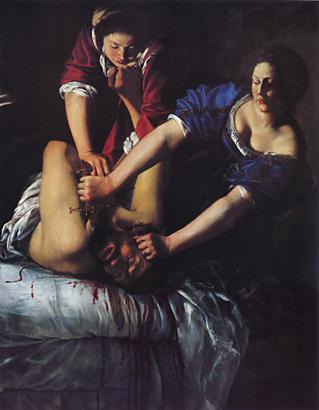
Her paintings depicted women. And when she painted a woman, she painted her life by trying to relive history in her mind and thus trying to feel what her model could have felt. That’s how she did Judith. She though of the emotional unpleasantness that could have taken hold of her upon deciding to slaughter Holofernes in order to save her people – the internal humiliation as she seduces him, all the while thinking of ways to delay the lovemaking and finally, the way she mustered the strength of both heart and body as she beheads the unconscious invader.

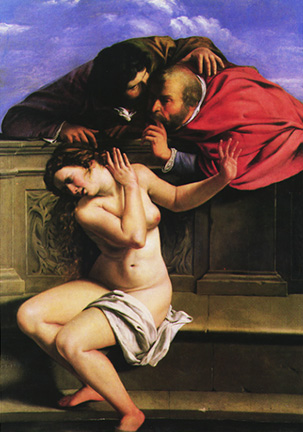
When she painted a woman, she sees her as a hero and not a mere carrier of a body to be stared at in lewd voyeurism. She maintains the emotion of the moment. The heart of the story. And so she painted the nude Susanna as a riveting picture of a threatened beauty, with modesty, innocence and shame all working harmoniously.

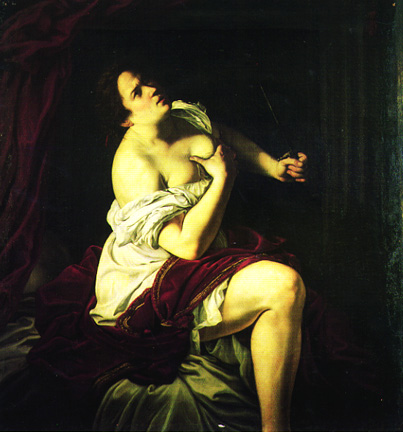
When she painted a woman abused by a man and further tortured by society, she used her brush as a conduit of her own pains. She sees her as a rational human being capable of doubt. She suspends popular belief for realistic human emotions. With this she painted Lucretia, a legendary woman who was raped and committed suicide, as a person who didn’t choose death deliberately, but a woman torn between choosing life over death and vice versa. Just when the public expected a spectacle full of blood, she gave them something to think about.

In The Passion of Artemisia, Susan Vreeland once again shows how a woman conquers her own fears as well as her personal and socially-established disadvantages so powerfully that she was able to present pain as one of the colors to contribute to the greatness of masterpieces. Her attempt to understand the artist’s heart and mind deeply, combined with the vast knowledge of hue names and artistic styles gave the novel a sturdy bridge from the characters to the reader. However, it would have been better if the settings description was as vivid as the varying tones and wonderful layering of pigments on canvass. But as one reads how a mind and heart of a very sensitive artist as Artemisia collaborate (or in some cases, conflict) to create a painting of a woman as heroic as the artist (unconsciously) is, the pleasant feeling of seeing how a beautiful soul mixes color and emotion and triumph and make a legacy to last centuries holds tightly and lingers. Then it stays, creating an image stronger and more graphic than towers and buildings with complex architectural designs.
Vreeland presented Artemisia as a woman of depth, feeling and love. The way she loved her art was moving – the incessant sketching and brainstorming, the relentless attempts to master the craft, the people and feelings she has to let go of and the lifelong journey towards artistic greatness.
One of the lessons I learned in art school was to love art and it will love me in return. It will take a long time and may not come as easily as I want to, but it will. And in the case of Artemisia Gentileschi, it sure did.

Currently reading:
Photo source
Judith Slaying Holofernes, Susanna and the Elders, Lucretia, Black and Blue